Who Owns Your Processes? (And Why Automation Fails Without Clear Accountability)
Automation doesn’t just require clean data and defined processes — it requires ownership. In many growing businesses, responsibility is shared, unclear or fragmented across teams. This blog explores why unclear accountability quietly breaks automation, the risks of “shared ownership,” and what strong process governance actually looks like in practice.
Tayo Richards
3/10/20261 min read
When automation fails, most businesses blame the software.
But often, the real issue is simpler:
No one truly owns the process.
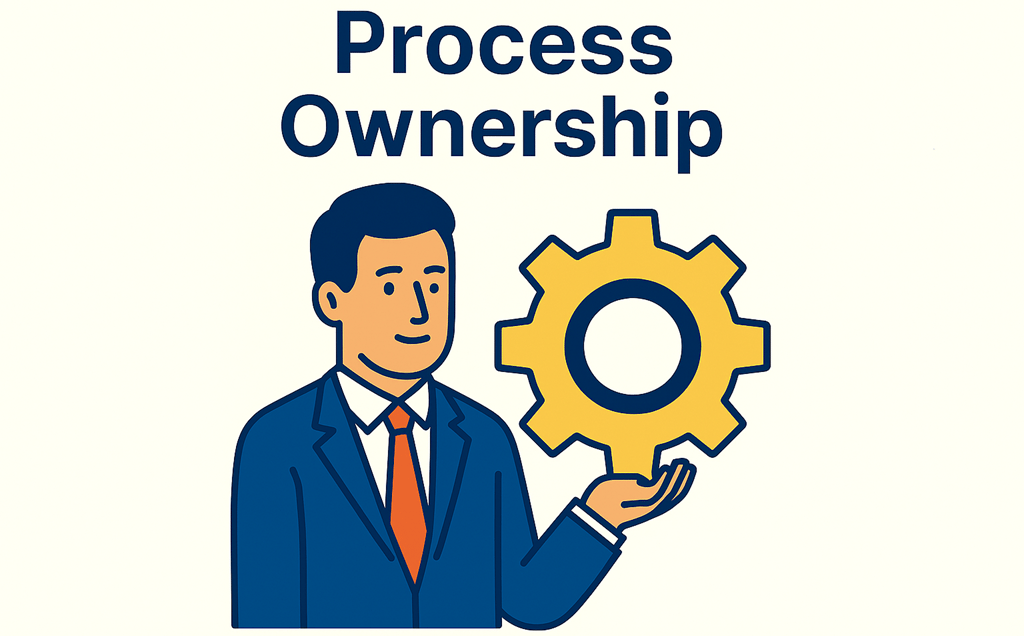
And automation cannot work without ownership.
The “shared responsibility” trap
Ask a simple question:
“Who is accountable for this process working properly?”
If the answer sounds like:
“Operations handle part of it.”
“Finance checks it sometimes.”
“IT manages the system.”
“It’s shared.”
Then you have a governance problem.
Shared responsibility often means no real accountability.
Why automation exposes this instantly
Manual processes can survive vague ownership.
People step in.
Someone fixes it.
Teams compensate.
Automation doesn’t compensate.
If something breaks:
Who decides what to change?
Who approves updates?
Who monitors performance?
Who owns exceptions?
Without clear ownership, automation stalls.
What unclear ownership causes
When no one owns the process end-to-end, you’ll see:
• inconsistent decisions
• finger-pointing between teams
• slow changes
• exception overload
• stalled improvements
Automation magnifies these weaknesses.
It doesn’t fix them.
What strong process ownership looks like
Automation-ready businesses have:
✔ One accountable owner per process
✔ Clear decision authority
✔ Defined performance measures
✔ Regular review points
✔ Clear escalation paths
Ownership doesn’t mean doing all the work.
It means being accountable for outcomes.
Governance doesn’t have to be heavy
Many SMEs avoid governance because it sounds bureaucratic.
It doesn’t need to be.
Good governance is simply:
clarity
accountability
visibility
simple controls
That’s it.
And without it, automation creates confusion at scale.
A quick ownership test
Pick one key process.
Ask:
Who owns it end-to-end?
Who approves changes?
Who monitors performance?
Who resolves issues?
If the answers aren’t immediate and clear, automation will struggle.
Automation needs structure
Tools work best in structured environments.
Ownership is the structure.
Without it, automation becomes:
unstable
dependent on workarounds
slow to evolve
With it, automation becomes scalable and reliable.
Want to know if your governance is automation-ready?
Our free 15-minute Automation Readiness Assessment highlights:
• ownership gaps
• governance risks
• process weaknesses
• priority fixes
👉 Take the readiness check and get your clarity score.