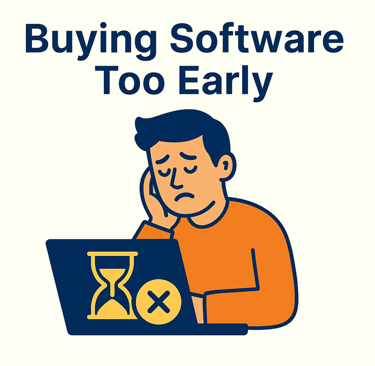
The Biggest Automation Mistake SMEs Make: Buying Software Too Early
Many businesses rush into automation tools expecting instant efficiency — only to end up frustrated, over budget and still fixing manual problems. In this post, we explain why buying software before clarifying processes and data almost always backfires, the hidden costs of premature automation, and what to fix first to make automation actually work.
Tayo Richards
3/3/20261 min read
Automation tools are everywhere.
CRMs. Workflow platforms. AI assistants. All are promising to save time and streamline operations.
But one mistake derails more automation projects than anything else:
buying software before fixing the basics.
Tools don’t create clarity — they scale what already exists
Automation software doesn’t magically organise your business.
It simply follows:
• your current processes
• your existing data
• your current controls
If those are messy, unclear or inconsistent, automation will make the mess faster.
That’s why many businesses end up with:
expensive tools no one uses properly
automated errors
more rework than before
frustrated teams
Not because the tool was bad — but because the foundations weren’t ready.
Why this feels like the “right” move (but isn’t)
Buying software feels productive.
You can:
✔ tick a box
✔ show progress
✔ “do something” about inefficiency
Fixing processes and data feels slower — even though it saves far more time later.
So businesses skip the boring work.
And pay for it later.
The hidden costs of automating too early
When foundations aren’t ready, automation leads to:
• constant manual fixes
• exceptions everywhere
• broken workflows
• unreliable reporting
• rising support costs
Instead of freeing time, it creates dependency on workarounds.
That’s not automation.
That’s chaos at speed.
What successful automation actually starts with
Before tools, high-performing businesses fix:
✔ process clarity (who does what, when, and why)
✔ data structure (clean, consistent, owned)
✔ accountability (clear owners end-to-end)
✔ simple controls (checks that prevent errors)
Once those exist, automation becomes easy — and far cheaper.
Think of it like this
Buying automation software before readiness is like:
Installing a high-speed engine in a car with no steering.
It moves faster.
But not in the right direction.
The good news
You don’t need perfect systems.
You just need:
• clear processes
• decent data foundations
• ownership
• basic governance
Fix those first — then automation delivers real results.
Want to know if your foundations are ready?
Our free 15-minute Automation Readiness Assessment shows:
• where your biggest gaps are
• what to fix first
• what’s already working
• how ready you are for automation success
👉 Take the readiness check and get your clarity score.